
9 October 2026 · 2 min read
Aiako Harria, the mystical forest of the Basque Country
At the gateway to the Pyrenees, moss-covered pollarded beeches, hidden waterfalls and forgotten shelters: a landscape on the edge of reality.
At the gateway to the Pyrenees, where the mountains meet the influence of the Atlantic, the forests of Aiako Harria seem to belong to another time.
You have to leave the summits behind and venture beneath the trees to discover another side of the massif — a forest that is damp, dense and silent, shaped as much by the elements as by the people who have wandered through it for centuries.
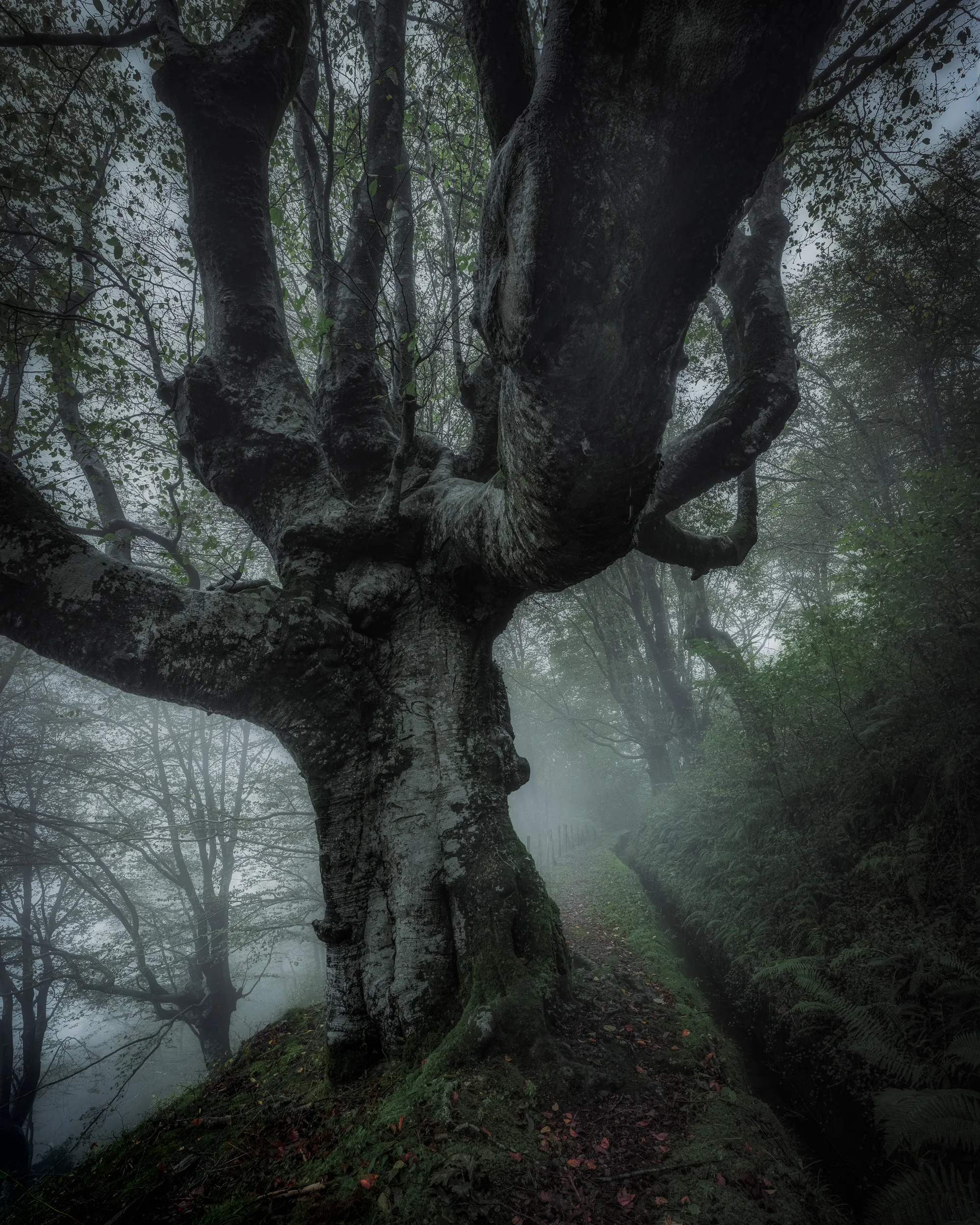
Everywhere, ancient beeches catch the eye. Some still bear the distinctive forms of pollarded trees, once regularly pruned so their wood could be harvested without cutting them down. Over the decades, their trunks have thickened, divided and twisted into extraordinary shapes. Their gnarled silhouettes can sometimes appear almost human. Covered in moss, marked by time and moisture, they have become, to me, one of the most distinctive faces of these forests.
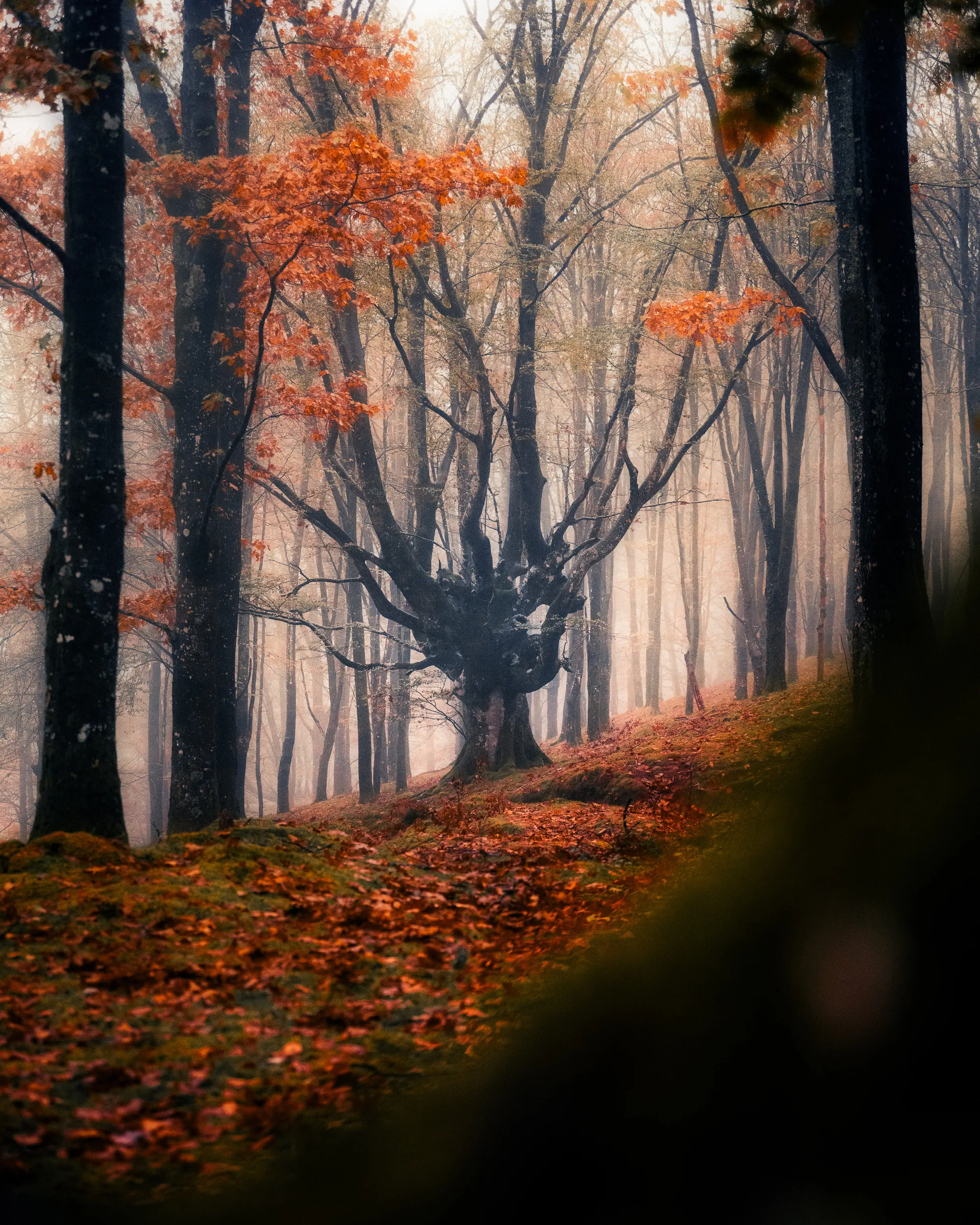
Around them, vegetation is constantly reclaiming the land. Ferns cover the forest floor, moss envelops stones and roots, and fallen branches slowly disappear beneath the green. When the mist descends from the mountains, it slips between the trunks and erases the distance. The forest then reveals itself only in fragments.
And then there is the water.
It is almost always present in these landscapes — sometimes visible, often simply sensed. It trickles between stones, runs through the undergrowth and, around the bend of a trail, gives rise to small waterfalls hidden beneath the vegetation. Some seem to exist only for those willing to stray from the most obvious paths.
From time to time, a structure emerges: a small refuge, a cabin, a solitary shelter among the trees. A discreet trace of human presence within an environment that seems to have almost entirely absorbed it. Over time, stones become covered in moss, walls take on the same tones as the surrounding trunks, and the boundary between what belongs to us and what belongs to the forest becomes less distinct.
Human presence here is ancient. For thousands of years, these mountains have been crossed, inhabited and shaped by people. The cromlechs and other megalithic remains scattered throughout the massif still bear witness to this past. The pollarded trees tell a more recent story: that of a forest worked, used and gradually transformed by the generations who came before us.
Perhaps this is what fascinates me most about Aiako Harria.
The forest is neither entirely wild nor truly domesticated. It preserves the traces of those who have passed through it, while slowly covering them over again.
This series was born from that feeling.
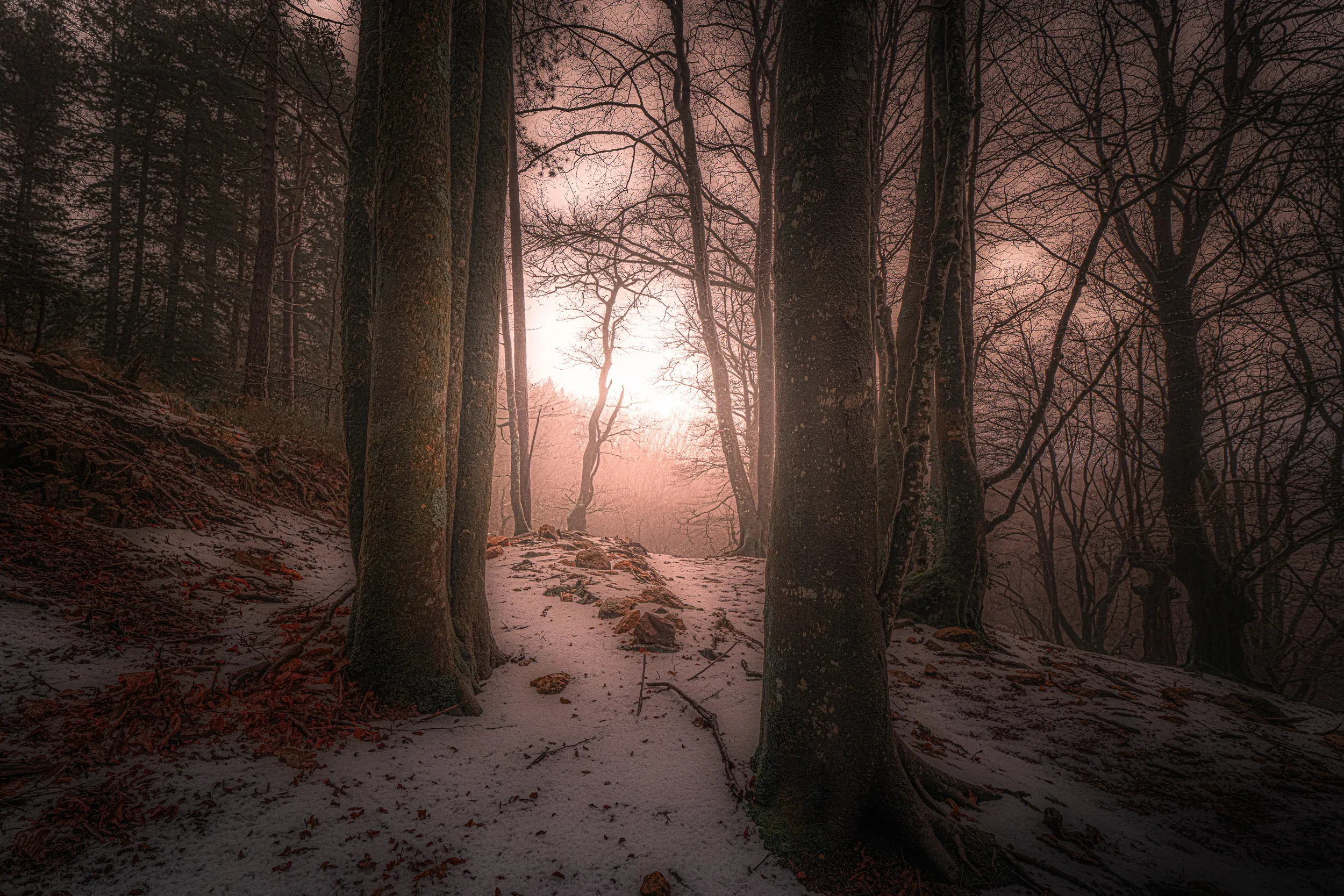
I did not set out to create an inventory of the forests of Aiako Harria, but rather to photograph what they make me feel: the strange silhouettes of ancient trees, a cabin emerging through the mist, the movement of a waterfall hidden beneath the leaves, a few moss-covered stones, or simply a fleeting light finding its way through the branches.
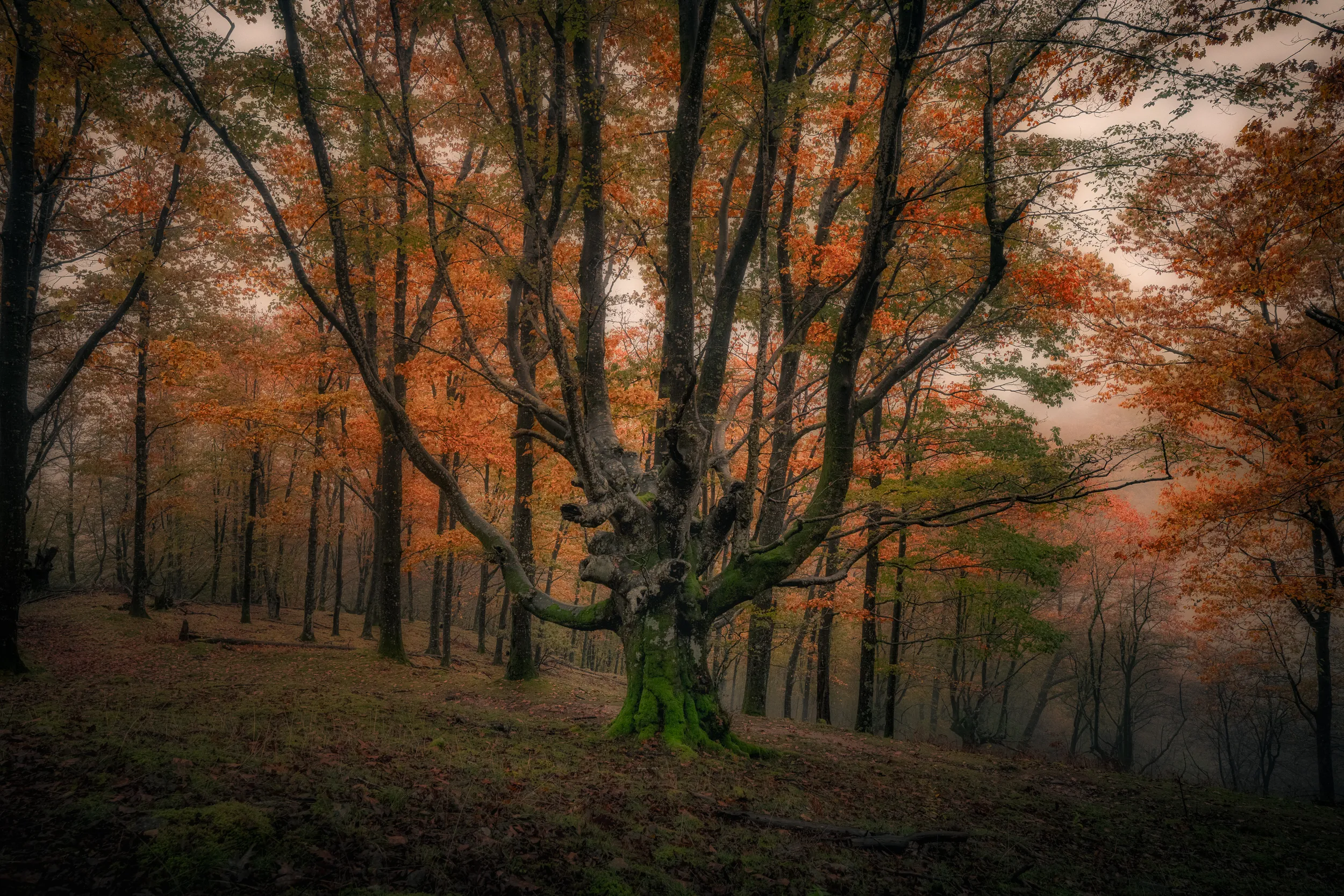
Fragments of an ancient landscape, where every turn seems capable of revealing something.
A landscape on the edge of reality, somewhere between memory, silence and imagination.